Aris Cooktop
1. Executive Summary & The Evolution of Timer-Integrated Induction Technology
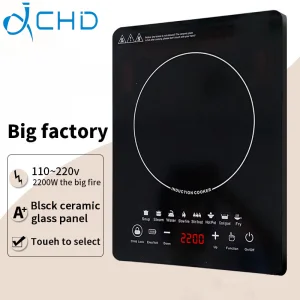
The global commercial and residential culinary equipment markets are undergoing a seismic transformation. As commercial kitchens transition away from fossil fuels, the induction cooktop has emerged as the definitive standard for heat-efficiency, precision, and operator safety. Among the array of technological features defining next-generation hobs, precision programmable timers have transitioned from a premium optional feature to an absolute regulatory and operational requirement.
For B2B procurement managers, global appliance distributors, and commercial kitchen designers, selecting the right manufacturer of induction cooktops with integrated timers involves evaluating complex variables. These range from electromagnetic compatibility (EMC) and thermal management systems to microcontroller unit (MCU) stability under high ambient temperatures. This whitepaper analyzes the manufacturing landscape, technology vectors, and key performance indicators (KPIs) of the top induction cooktop exporters, positioning Foshan Aris Cooktop Co., Ltd. within this competitive framework.
2. Industry Evolution & Development Trends of Induction Cooktops with Timers
The history of induction hobs has been marked by continuous refinements in power electronics. The incorporation of a dedicated digital timer system represents a key milestone in this evolution. Historically, mechanical dial timers were prone to steam ingress and physical degradation. Modern solid-state capacitive touch sensors and smart MCU micro-processors have resolved these points of failure.
A. Digital Micro-Controllers (MCU) and Synchronous Auto-Shutoff
Modern timer configurations utilize dedicated 8-bit or 32-bit MCUs (Microcontroller Units) operating concurrently with the main power-stage controller. By isolating the timer circuits from the high-voltage IGBT (Insulated Gate Bipolar Transistor) driving logic, manufacturers ensure that voltage spikes or thermal loads do not affect the countdown accuracy. The auto-shutoff mechanism is wired directly to the gate-driver circuit, ensuring instantaneous shutoff the moment the countdown reaches zero.
B. Smart Multi-Zone Interoperability
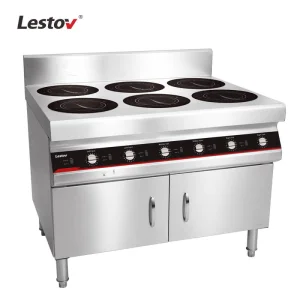
In multi-burner systems (such as 4-burner or 5-burner cooktops), the primary technical challenge is cross-zone logic control. Each zone must operate on an independent timer loop without causing signal delays or UI latency on the main control panel. Top-tier manufacturers now employ dynamic multiplexing architectures within their control panels, enabling the chef to monitor and adjust up to five zones independently.