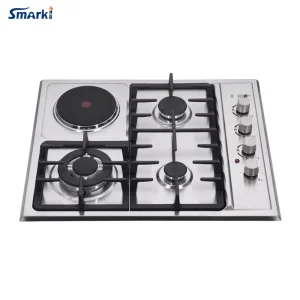
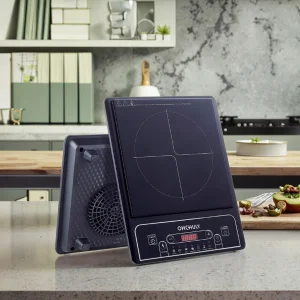
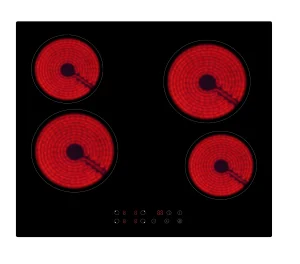
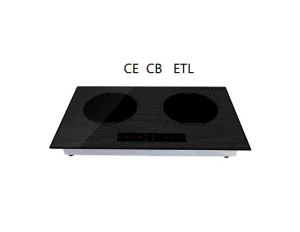
Explore our high-performance household and commercial induction systems, engineering speed, safety, and temperature control into every unit.
A comprehensive overview of high-speed energy transfer, magnetic resonance engineering, and thermo-electric efficiency.
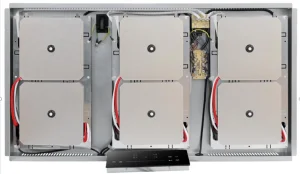
Unlike conventional electric radiant hobs or gas burners that rely on thermal conduction (heating the surface element to eventually transfer energy to the cookware), rapid induction heating creates localized heat directly within the cooking vessel. By supplying an alternating electric current (AC) to a copper coil situated underneath the glass-ceramic cooktop, a highly localized and high-frequency alternating magnetic field is generated.
When a ferromagnetic pot or pan is placed inside this dynamic magnetic field, it experiences magnetic flux changes, inducing electric currents called Eddy Currents within the base of the metal pot. The resistance of the ferromagnetic alloy converts these currents into direct heat energy through Joule heating (I²R loss).
The speed and safety of rapid induction systems depend heavily on the internal inverter circuit board. Modern professional appliances from leading manufacturers utilize either Half-Bridge or Full-Bridge resonant inverter topologies paired with advanced Insulated Gate Bipolar Transistors (IGBTs).
Our rapid heating controllers switch the current frequency between 20 kHz and 50 kHz. This high-frequency operation yields thermal efficiency exceeding 90% to 95%, compared to only 40-50% for gas and 60-70% for standard electric cooktops. This leads to immediate boils, reduced warm-up intervals, and instant response during temperature adjustments.
Key Technical Insight: By concentrating energy directly within the cookware matrix, thermal dissipation to the room is minimized, cutting cooling costs in commercial kitchens and supporting global decarbonization and safety standards.
A Professional China Induction Cooktop Manufacturer and Smart Induction Stove Supplier.
Foshan Aris Cooktop Co., Ltd. is a professional China induction cooktop manufacturer and smart induction stove supplier, specializing in the research, development, manufacturing, and global distribution of advanced kitchen cooking appliances. Based in Foshan, Guangdong, a renowned center for home appliance manufacturing, the company is committed to delivering innovative, energy-efficient, and reliable cooking solutions for customers worldwide.
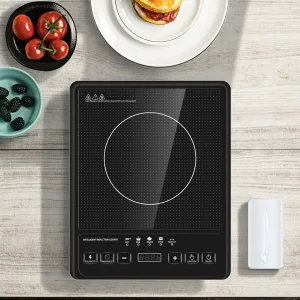
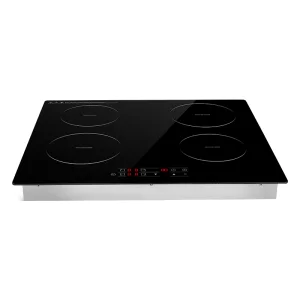
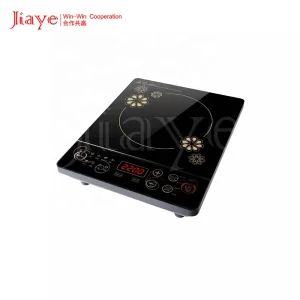
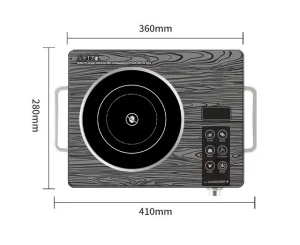
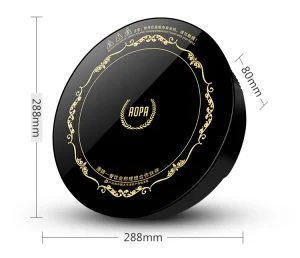
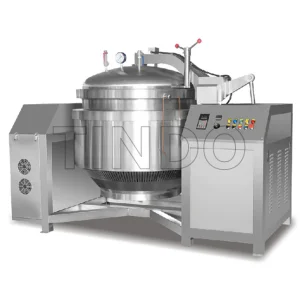
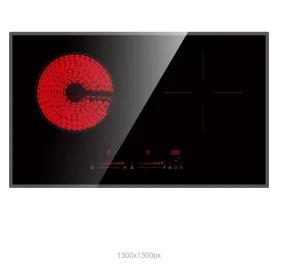
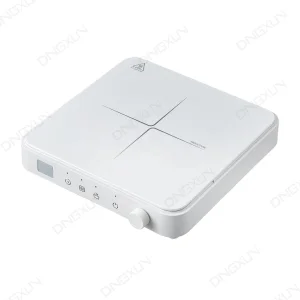
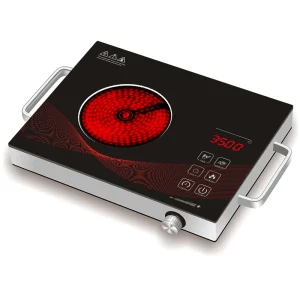
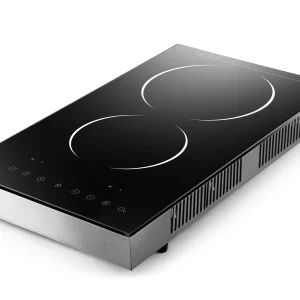
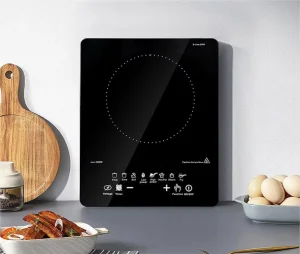
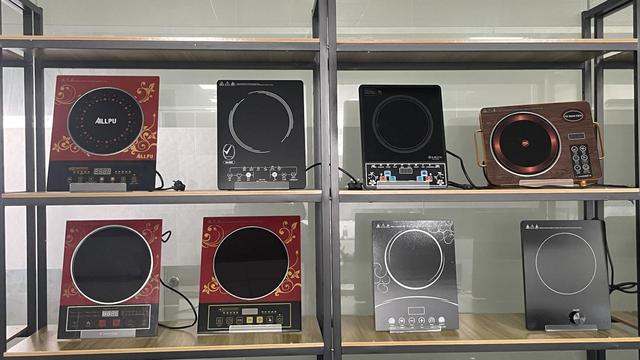
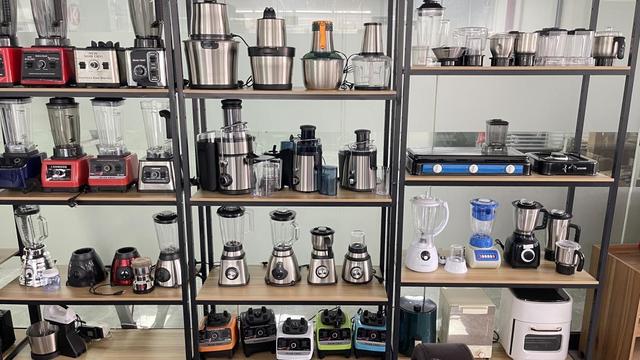
Aris Cooktop offers a comprehensive range of products, including built-in induction cooktops, portable induction cookers, commercial induction stoves, double burner induction cooktops, smart induction hobs, and customized kitchen appliance solutions. Combining modern design with intelligent technology, our products are engineered to provide fast heating, precise temperature control, enhanced safety, and superior energy efficiency for both residential and commercial applications.
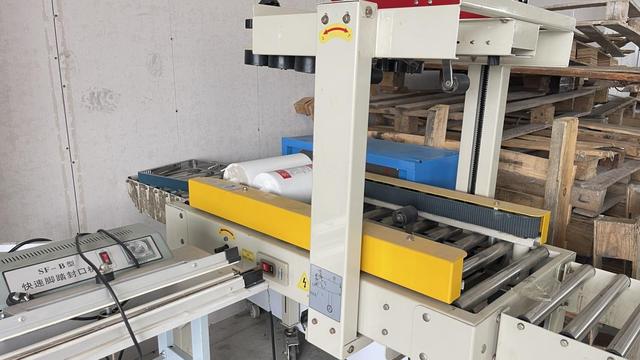
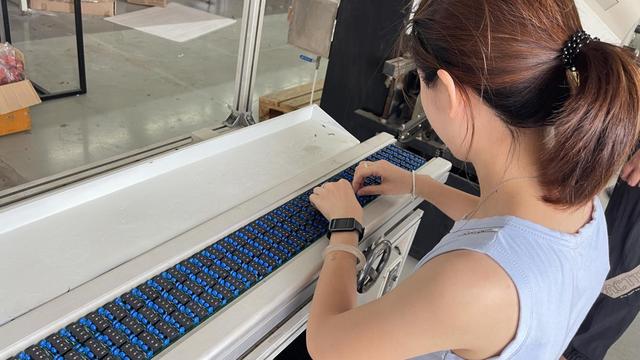
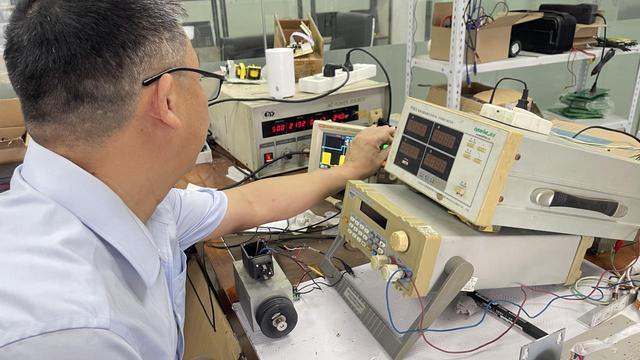
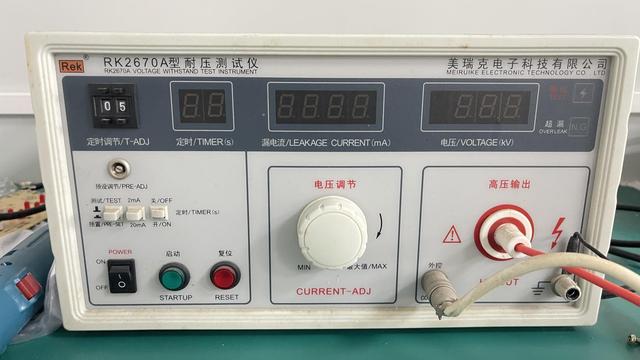
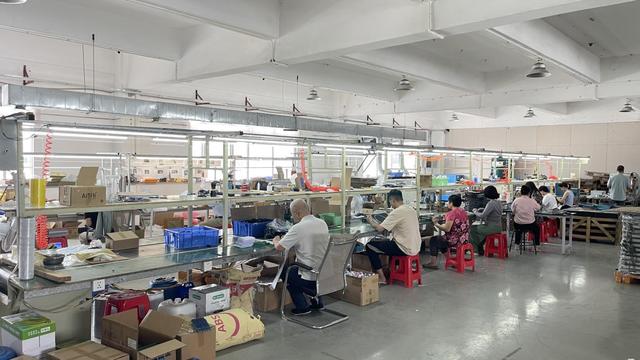
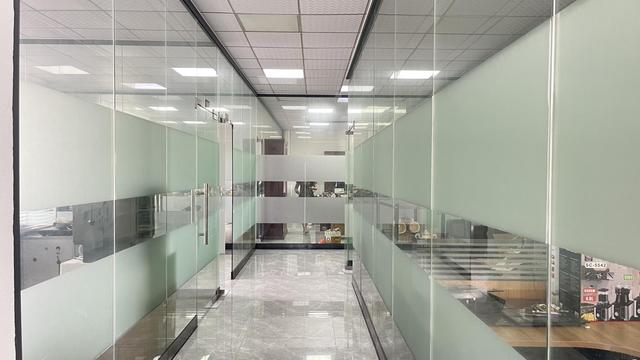
Equipped with advanced production facilities and automated assembly lines, Aris Cooktop maintains strict quality control throughout every stage of manufacturing. From raw material sourcing and component inspection to product testing and final packaging, each induction cooktop undergoes comprehensive performance and safety evaluations to ensure compliance with international quality standards.
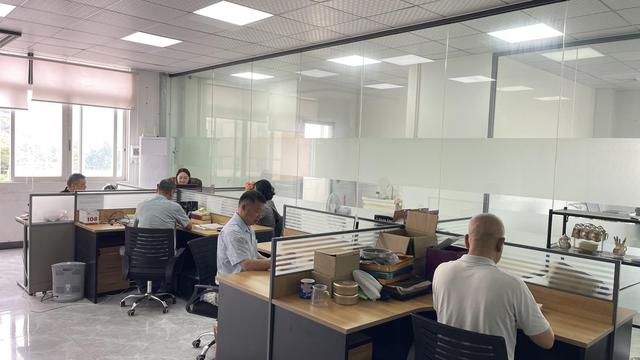
To meet the diverse requirements of global markets, we provide flexible OEM and ODM services for international brands, distributors, wholesalers, retailers, and e-commerce businesses. Our experienced R&D team works closely with customers to develop tailor-made products, offering customized designs, functions, user interfaces, packaging, and private label solutions.
Driven by innovation, quality, and customer satisfaction, Foshan Aris Cooktop Co., Ltd. continues to strengthen its presence in global markets. We strive to become a trusted partner for smart kitchen appliances by delivering high-performance induction cooking solutions that create safer, more convenient, and energy-saving cooking experiences for consumers around the world.
Ensuring seamless legal access and electrical safety alignment across the European Union, Americas, and APAC markets.
Our cooking surfaces strictly conform to EU Low Voltage Directive (LVD) 2014/35/EU and Electromagnetic Compatibility (EMC) Directive 2014/30/EU, mitigating grid fluctuations and harmonic pollution.
We configure custom variations that meet UL 858 standards for household electric ranges and FCC Part 18 specifications, ensuring minimal RF interference with household communication devices.
Configured for localized electrical grids: multi-voltage designs (110V/60Hz, 220V/50Hz, 380V three-phase) allowing global distribution with correct regional plugs and electrical load ratings.
Why China's premier household appliance hub offers unmatched production capacity and cost efficiency.
Immediate access to localized microcrystalline glass suppliers, high-frequency copper coil winders, and advanced semiconductor packaging facilities. This proximity lowers raw material logistics costs and streamlines lead times.
By utilizing robotic SMT line technology for PCB fabrication and automatic pick-and-place assembly, we ensure high quality and lower defect rates, passing savings directly to our global buyers.
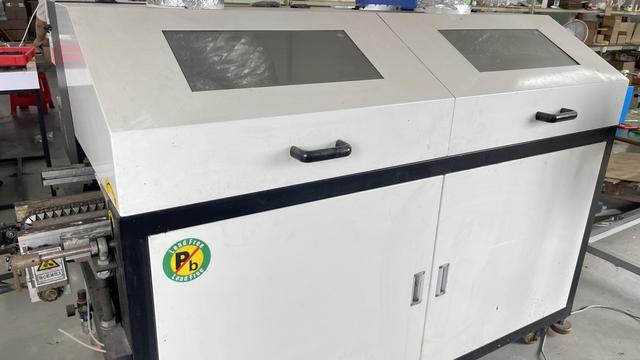
Operating at high volume, our production facilities satisfy international environmental regulations, offering recyclable packaging, lead-free soldering, and high-efficiency standby power controls.
Exploring the shift to carbon-neutral electric induction hobs in residential, commercial, and marine sectors.
Cities globally are adopting natural gas bans in new constructions to reduce carbon emissions. Induction stoves present an alternative, allowing restaurants and residential developers to deliver premium, rapid cooking performance without relying on fossil fuels.
Modern consumers demand high-precision options like sous-vide, which require constant water baths within a single degree of variation. Integrating NTC sensors directly under our microcrystalline plates allows real-time feedback, preventing temperature fluctuations.
Quick Service Restaurants (QSR) and dark kitchens need rapid heating to meet tight delivery windows. The absence of open flames reduces the risk of kitchen fires and lowers HVAC ventilation costs, as induction systems release minimal ambient heat.
Our R&D features programmable Wi-Fi-enabled PCB boards. These modules connect to home automation systems, allowing cooking process management, auto power reduction during peak hours, and off-grid solar-battery optimization.
Explore our space-saving cooktops, high-output double burners, and integrated hybrids designed for versatile cooking styles.
Detailed technical advice on importing, compliance, and component options from our senior engineering team.
 Aris Cooktop